
As soon as the snow begins to melt, we immediately think of our lawn hiding underneath. See all the steps to take to ensure its maintenance at the start of the season.
The care to give your lawn at the beginning of spring
What should we do when the lawn appears? Nothing! Patience is a gardener's virtue!
- Let the snow melt on the lawn at the pace of the temperatures;
- Do not walk on the lawn while it is wet;
- Remove the protective covers installed in the fall.
These simple actions prevent damaging the roots of the lawn. Indeed, walking on wet soil may compact it, slow down root growth, and thus leave more room for weeds. It is therefore better to wait before raking the lawn.
Once the snow has melted and the lawn is dry (patience!), vigorously rake the lawn with a leaf rake. This will remove the debris accumulated during the winter season and allow the lawn to green up more quickly.
Repairing your lawn in spring, step by step
The harshness of winter may have caused damage in some areas of your lawn. Pay particular attention to areas where the grass no longer seems present or is rather sparse. Before undertaking these small tasks, ensure that the soil is warmed up and that its temperature is adequate for seed germination. To ensure germination, the soil temperature (not the ambient temperature) must be 15℃.
Required materials:
- Leaf rake (plastic or metal teeth rake, rather flexible)
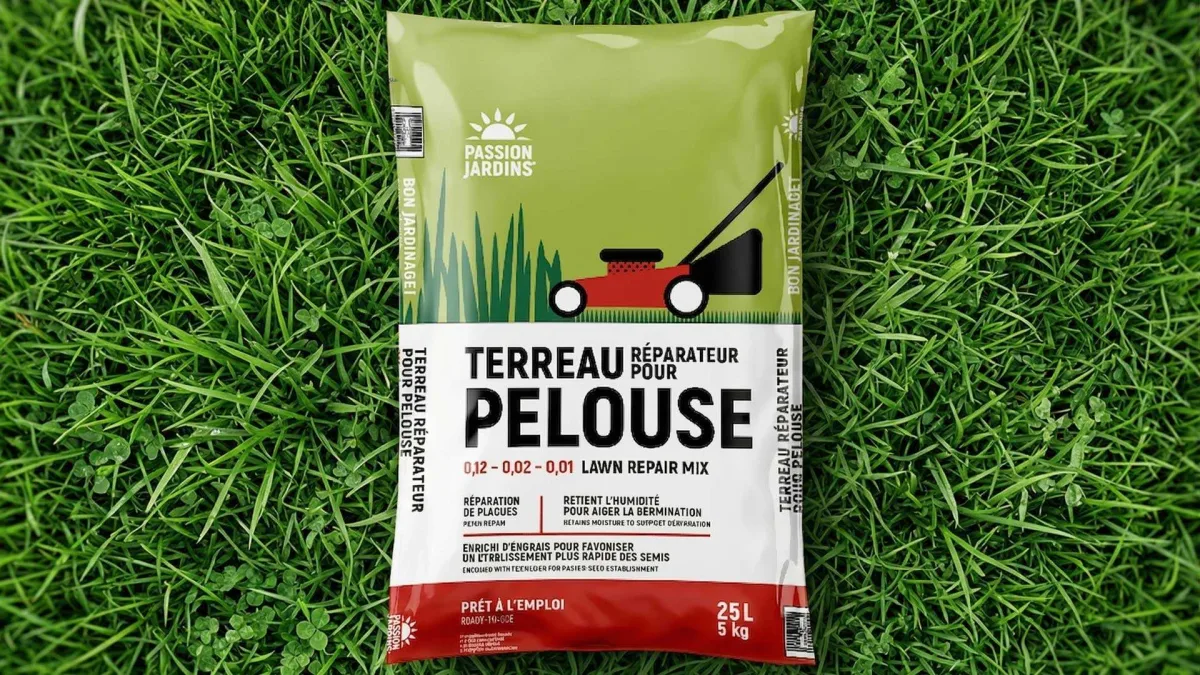
- Passion Jardins® lawn repair soil
- Grass seeds
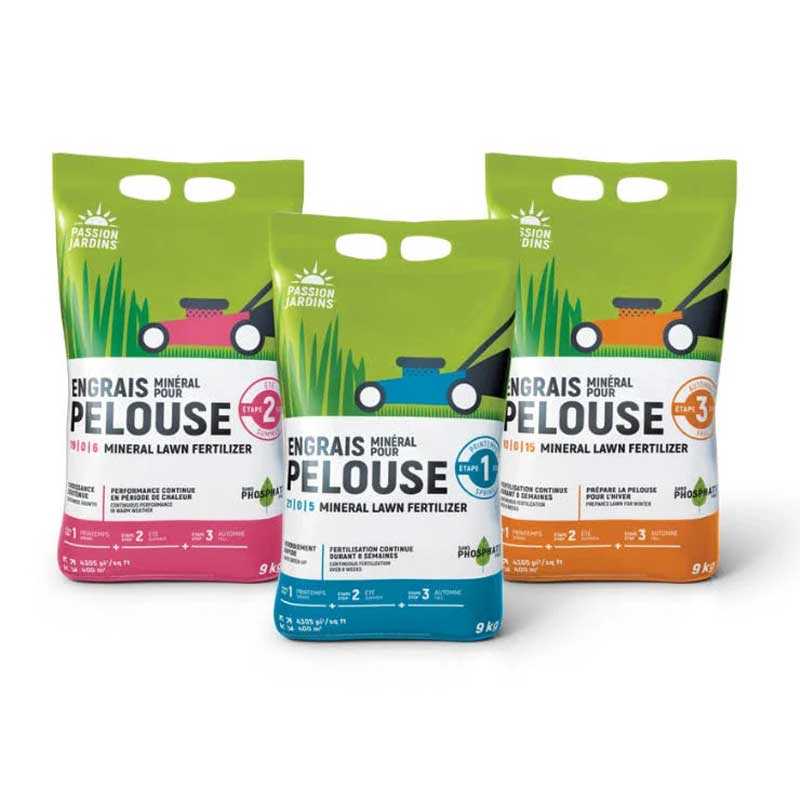
- Passion Jardins® 3-step lawn fertilizer
Procedure
- Apply a thin layer of Passion Jardins® lawn repair soil.
- Choose a seed mix suited to the area to be repaired (sun, shade, minimal maintenance, with clover, etc.). Your Passion Jardins retailer will advise you on the ideal mix for your situation.
- Spread the seeds following the manufacturer's recommendations for the area to cover. More is not always better. 😉
- Gently rake to ensure the seeds are in good contact with the soil.
- Water regularly: the soil must remain constantly moist for 10 to 14 days following seeding. Watering should usually be done 1 to 2 times a day to properly moisten the soil and seeds. A fine droplet spray (rain spray) is preferred to prevent the seeds from moving and to ensure more uniform germination. Note: Municipal regulations must always be respected.
- Mow the lawn when it reaches a height of 10 cm (4 in): this will allow it to widen (till) and fill the space more quickly.
Care to take during the season
Would you like your lawn to be greener than your neighbor's? It is important to fertilize it 3 times a year to maintain its dark green color and density. A dense and lush lawn gives less chance for undesirables to settle but also limits the different stresses that can occur during the season, such as:
- Heatwaves and droughts
- Invasion of harmful insects
It is wise to avoid fertilizing a lawn during a heatwave and prolonged drought. To survive the lack of water, the lawn goes dormant and turns yellow. Growth is then halted but will resume when the rains return. It is therefore unnecessary to stimulate this growth. Mowing the lawn is also to be avoided during these dormancy periods.
Ideally, a lawn should be mowed to a height of 7-8 cm to allow its root system to be more effective in seeking water from the soil. Why? The longer the grass, the deeper its root system, allowing it to tap into the soil's water reserves, especially during heatwaves.
The application of fall fertilizer is done at the end of summer to prepare the lawn to face the rigors of winter and ensure a faster recovery the following spring. This application can be done in September or early October, allowing the fertilizer to be assimilated by the lawn before cold temperatures.
Look for our 3-step fertilization program and our Lawn Repair Soil at your Passion Jardins retailer. Whether you're in Saguenay-Lac-St-Jean, Bas St-Laurent, Centre-du-Québec, Estrie, Montérégie, Outaouais, Laval, Mauricie, Chaudière-Appalaches, Lanaudière, Laurentides, the greater Capitale-Nationale area, or even in Ontario, your lawn needs a helping hand to withstand the different stresses or small damages that can occur during the season... to make your neighborhood jealous!
FAQ
What area does a 25 L bag of Lawn Repair Soil cover?
- A 25 L bag will cover 20 to 25 sq ft for a thickness of ½ inch.
What area does a 9 kg bag of Passion Jardins lawn fertilization program fertilizer cover?
- Each 9 kg bag of fertilizer covers an area of 400 m2 (4,305 sq ft).
My seeds have frozen, are they still good?
- Yes and no. The enemy of seeds waiting to be sown is not the cold, but rather moisture. Moisture brings them out of dormancy and causes them to pre-germinate. When the cold arrives and moisture has been present for some time, pre-germinated seeds die. Therefore, seeds must be stored away from moisture.
My bags of soil have frozen, are they still good?
- Yes. Soils do not lose their properties when they freeze.
How long should I wait between fertilizer applications?
- It is recommended to wait a minimum of 6 weeks between each fertilizer application. The maximum release duration of the fertilizer is 8 weeks; after this time, no fertilizer is available. Therefore, fertilize every 6 to 8 weeks.
Tips and advice


