Trees, shrubs, and conifers
The Collection 49th Parallel Collection- Roses Designed for the Canadian Winter

Developed by the Vineland Research and Innovation Centre in partnership with the Canadian Nursery Landscape Association, the 49th Parallel Collection continues a long tradition of Canadian hybridization initiated in federal programs and perfected in Morden, Manitoba. The goal: to offer winter-hardy, disease-resistant, and floriferous roses all summer long, capable of performing even in regions where winters are particularly harsh, like most of Quebec. The name of the collection evokes this geographical line that crosses the country and symbolizes the hardiness sought in these varieties.
Here are four flagship roses from this collection to discover this season.
Niagara Blush
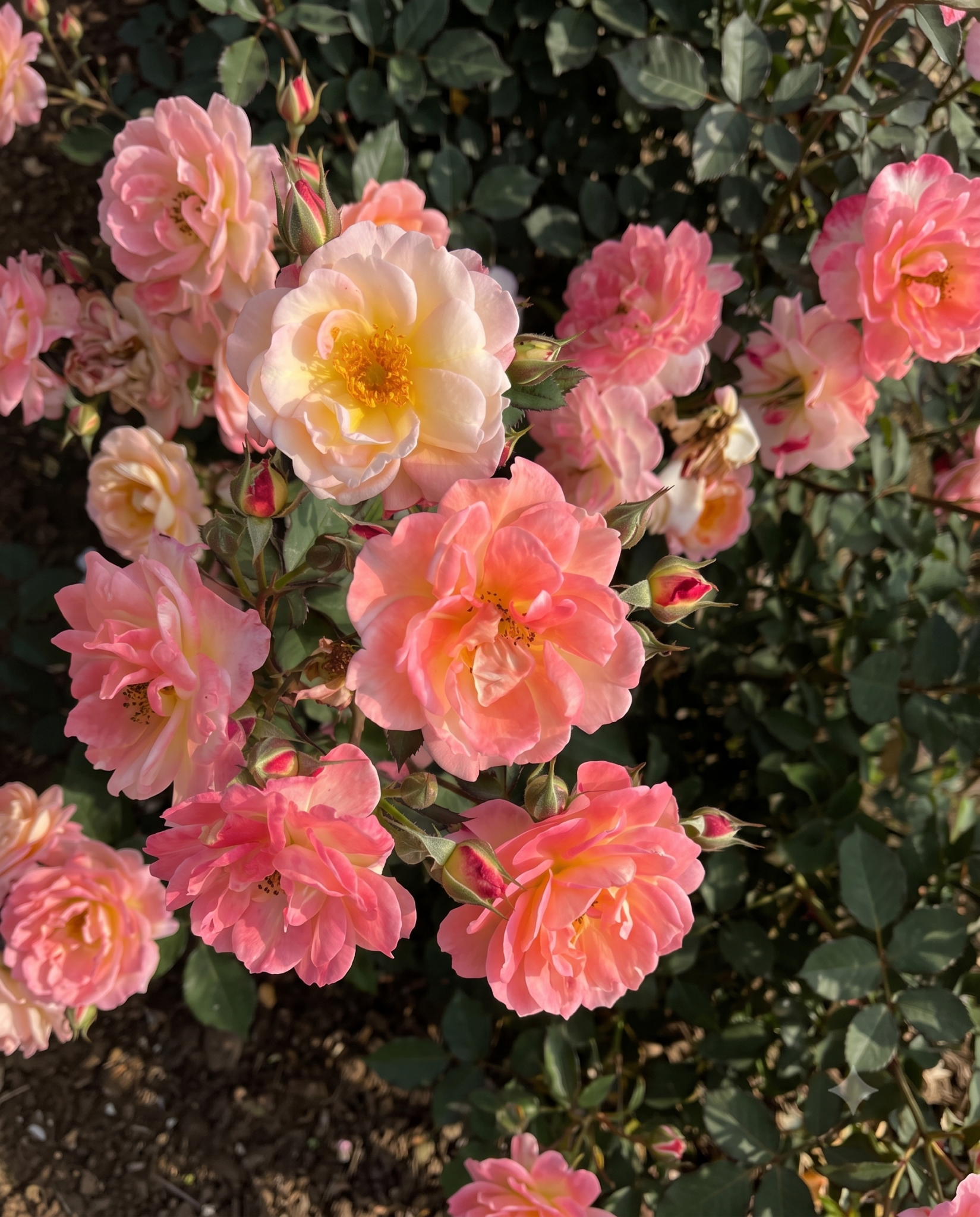
The latest addition to the collection, Niagara Blush stands out with its bicolor pink and yellow double flowers about 8 cm in size, slightly fragrant, which contrast with glossy dark green foliage. The shrub, compact and upright, is self-cleaning and offers good resistance to black spot, cercospora leaf spot, powdery mildew, and rust. Hardy in zone 3b, it does not require special winter protection and only needs watering during dry periods, with pruning in spring or fall to maintain a nice shape.
Aurora Borealis
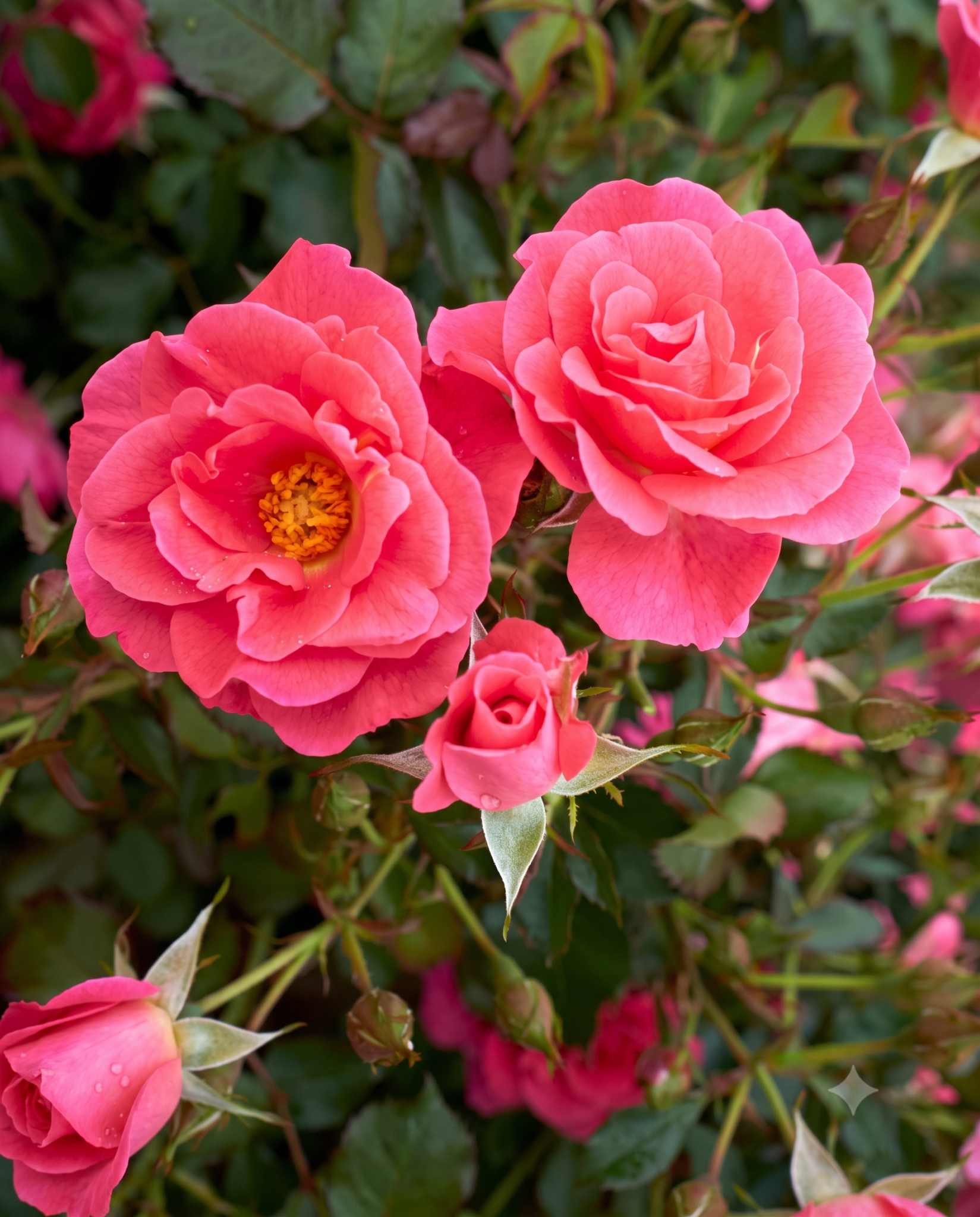
Launched in 2021 and named Plant of the Year at Canada Blooms the same year, Aurora Borealis takes its name from the changing hues of its flowers, a bright "sunset" pink tinged with orange and a yellow center. Clusters of 4 to 7 double flowers appear continuously from summer to fall on a vase-shaped upright shrub about one meter tall. In addition to being self-cleaning, this variety develops decorative and edible red-orange hips in the fall. It requires full sun, slightly acidic and well-drained soil, and annual pruning 15-25 cm from the ground in spring to maintain a dense habit.
Canadian Shield
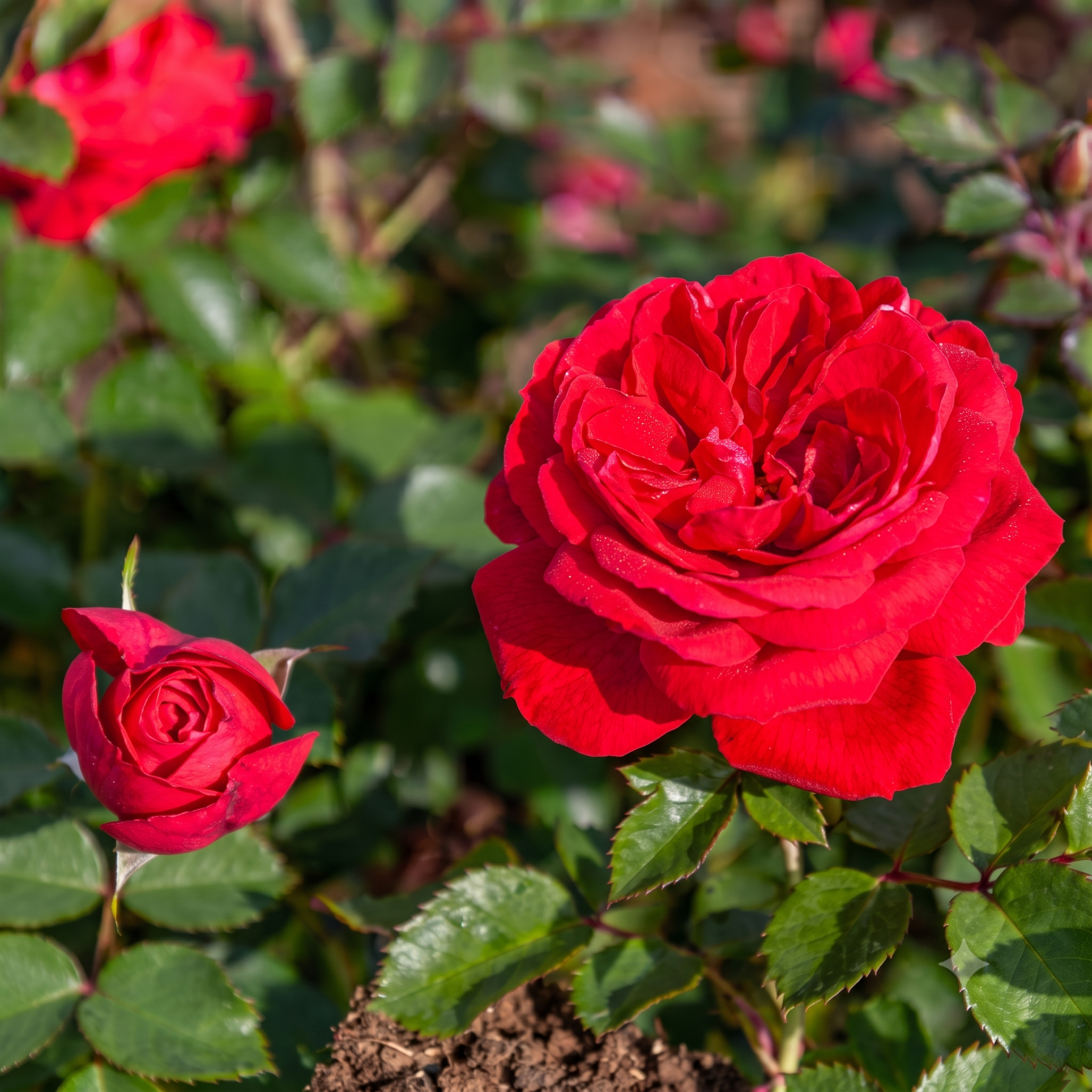
Released in 2017 to mark Canada's 150th anniversary and crowned Plant of the Year at Canada Blooms, Canadian Shield is probably the most robust of the group: it tolerates temperatures down to -40 °C. Its very double scarlet red flowers, with more than 40 petals, bloom profusely from early summer until frost on a bushier shrub than other varieties, reaching 1.2 to 1.5 m in height. Self-cleaning and highly resistant to black spot, it only requires occasional watering and light pruning in spring or fall. Its generous habit makes it an excellent choice for hedges, mass planting, or as a standalone specimen, and its flowers are well-suited for bouquets.
Chinook Sunrise
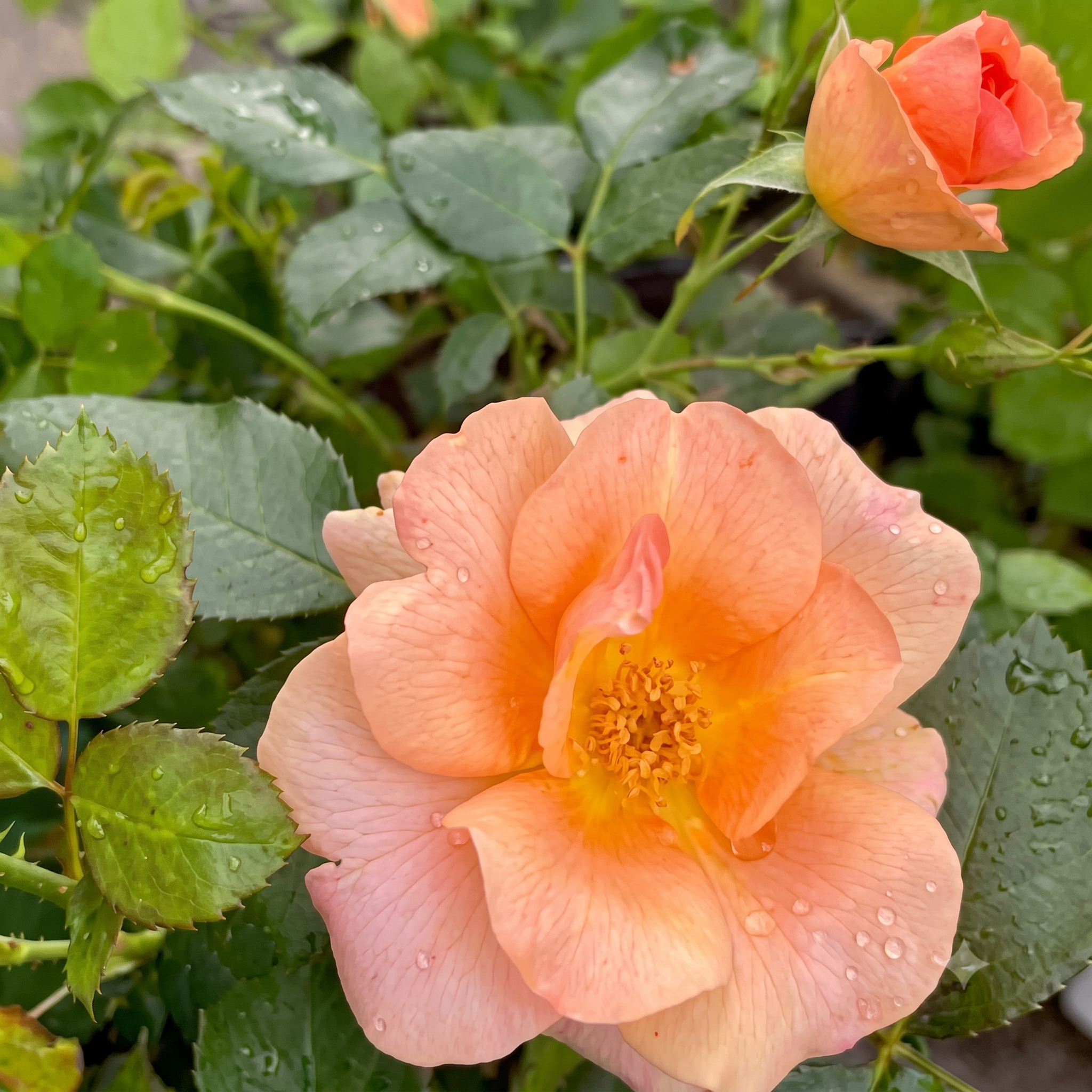
A gold medal winner at the international rose trials in Nyon, Switzerland, in 2020, Chinook Sunrise evokes a sunrise with its semi-double flowers blending coral, salmon, and pale pink around a yellow stamen center. An additional asset: its young spring shoots take on a burgundy hue, adding interest from the start of the season. The shrub, compact and well-branched, reaches 80 to 120 cm and blooms in waves from July to September. Highly resistant to black spot and not prone to suckering, it enjoys full sun and a location protected from prevailing north and west winds.
When and how to plant your 49th Parallel roses
The best time to plant these roses is in spring, once the risk of frost has passed, or early fall, at least six weeks before the first frosts, so the roots have time to establish well. Choose a full sun location, sheltered from prevailing winds, with well-drained soil.
When planting, dig a hole about twice the width of the root ball and amend your garden soil with Planting Soil from Passion Jardins. This 3-in-1 mix (peat, compost, black earth), approved for organic cultivation, improves soil structure and promotes rapid rooting, exactly what these roses need to get off to a good start. Place the shrub at the same level it was in the pot, fill with the soil mix and garden soil, then water thoroughly to eliminate air pockets.
The following spring after planting, and each spring thereafter, feed your roses with Mineral Fertilizer for Deciduous and Coniferous (12-6-12) from Passion Jardins. Ready to use, it supports the growth of the shrub and dense, lush foliage, an essential base before flowering.
Once the roses are well established and in full growth season, rely on Mineral Fertilizer for Flowering (7-14-14) from Passion Jardins. Ready to use and rich in phosphorus and potassium, it is specially designed to stimulate abundant flowering of flower beds; applied at the base of the roses at the beginning and during the season, it helps Niagara Blush, Aurora Borealis, Canadian Shield, and Chinook Sunrise produce their colorful bouquets uninterrupted until fall.
Why adopt them in the garden
These four varieties share qualities that greatly simplify the lives of gardeners: proven hardiness in zone 3, natural resistance to common rose diseases that avoids the need for treatments, and self-cleaning flowers that reduce maintenance. A good start with Planting Soil, fertilization adapted to each stage of the season, and a sunny location are enough to enjoy continuous flowering all summer. Proudly developed in Ontario, the 49th Parallel Collection proves that floral beauty and typically Canadian resilience can be combined.
Tips and advice


