
I know that you look at them every time you go to the garden center and that you don't dare to bring one home. I understand you, because they have a bad reputation: marantas and calatheas are not easy plants.
Yet they are magnificent plants, with a multitude of colors and patterns on their leaves. They are also called "prayer plants" because their leaves rise upwards in the evening and lower during the day. Why? They have small joints that allow them to move their leaves according to the day-night cycle. Quite simply! And it's really cool to observe.
Today, I want to help you overcome your fear of adopting one. Because yes, they have a reputation for being difficult, but they mostly have slightly more specific needs than a good old pothos or a sansevieria. The key with these plants? Good ambient humidity and suitable soil.
The ideal lighting
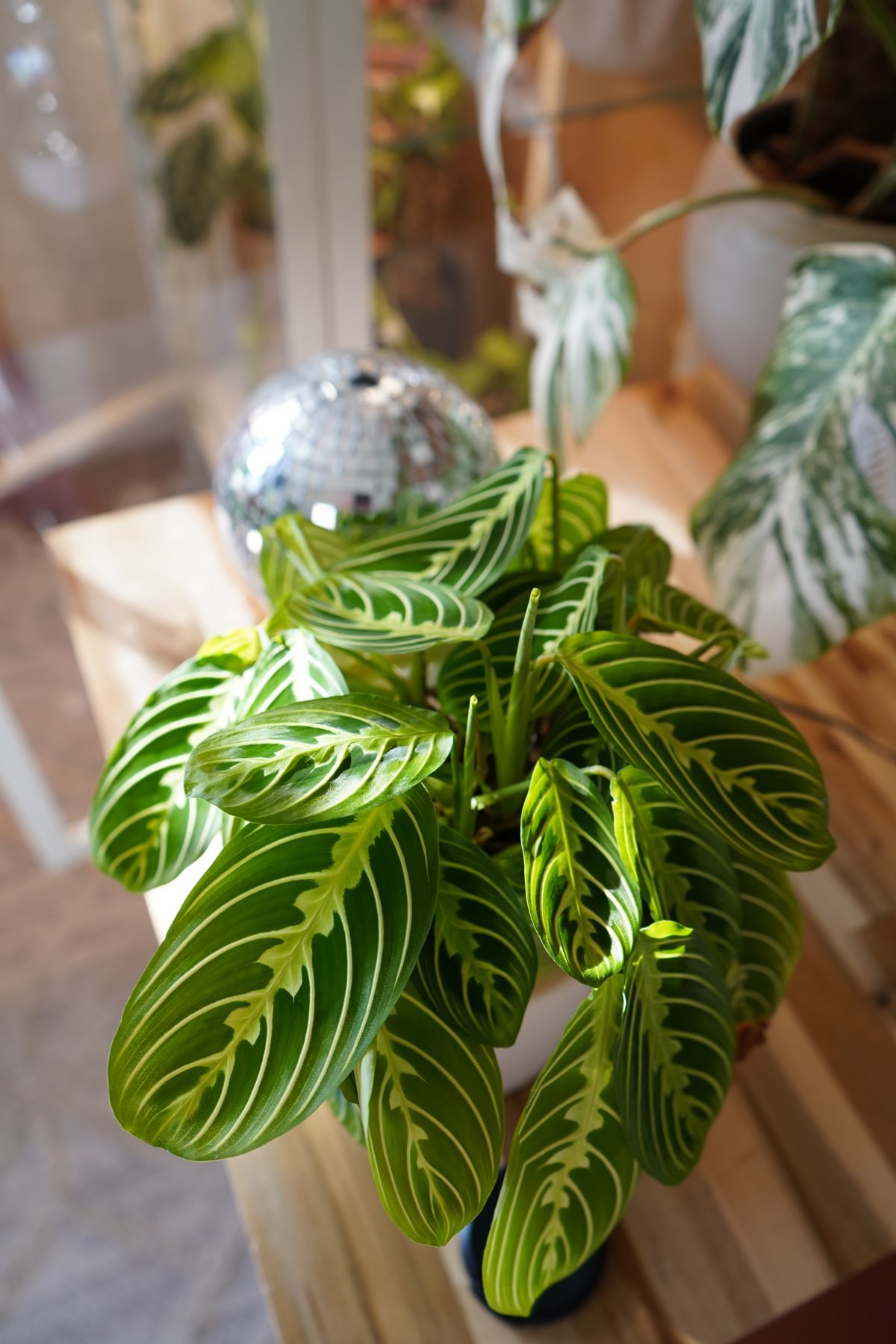
Where to place our maranta or calathea?
The ideal is to place them in a well-lit room, but without intense direct sunlight. The morning sun, which is much softer, can however be suitable. Too strong exposure can burn their leaves.
So, in a west-facing room, you will generally need to move them away from the window or filter the light. On the other hand, in an east-facing room, you can place them near the window, while still monitoring the intensity of the sun.
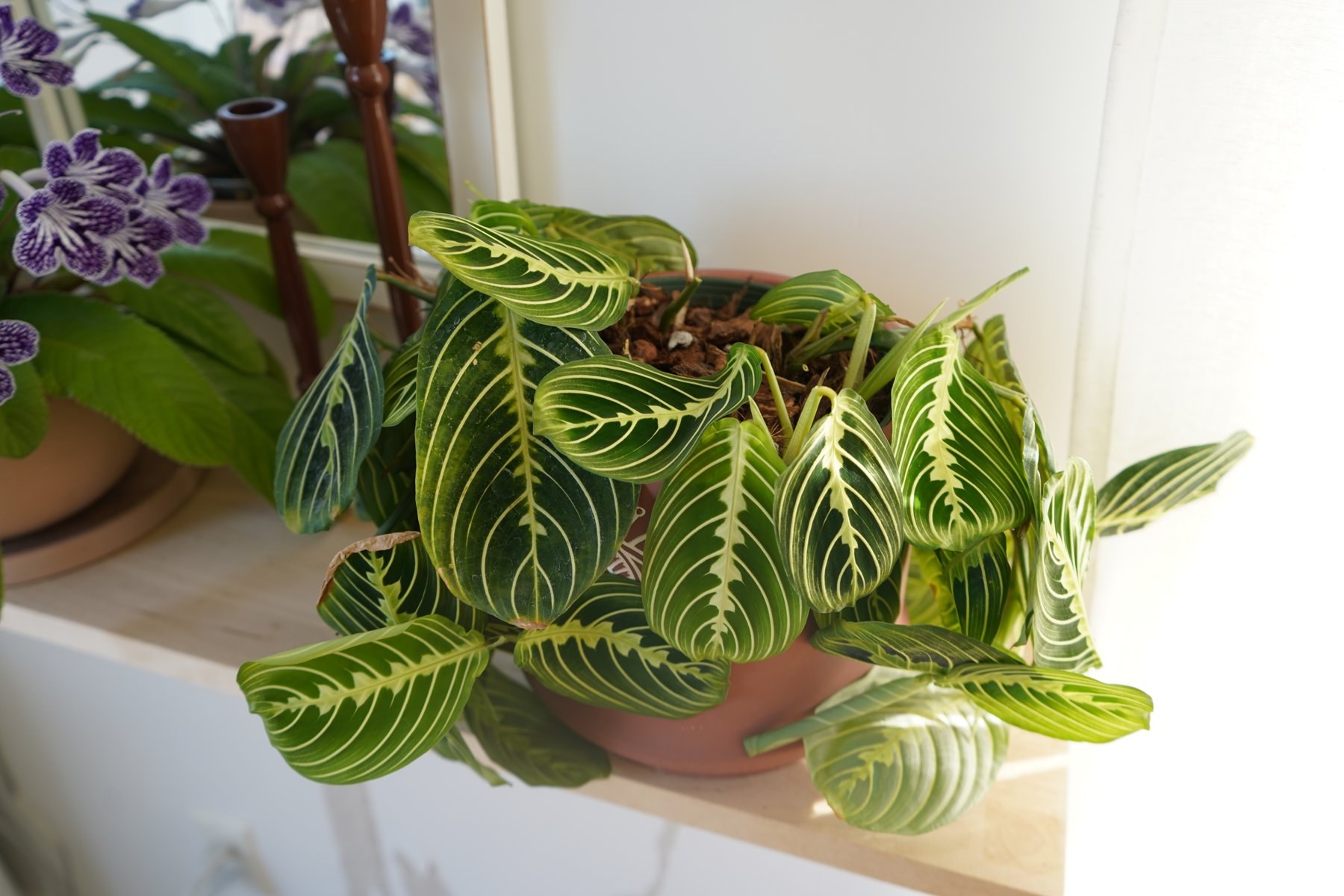
Humidity is essential
This is where things get tricky! Marantas and calatheas love ambient humidity. A relative humidity of around 60 to 80% can suit them, depending on the variety and growing conditions.
So yes, placing them in your bathroom can be a very good idea... IF you have good lighting!
No, Johanne, if your bathroom doesn't have a window and doesn't receive enough natural light, you can't just place a plant there and hope it survives. Sorry!
What I suggest is to add a humidifier nearby to increase the ambient humidity. You can also group your plants to create a slightly more humid environment around them.
You may have already heard of trays filled with clay pebbles and water. You can try this method, but know that its effect on ambient humidity is generally very limited. A humidifier remains a much more effective option.
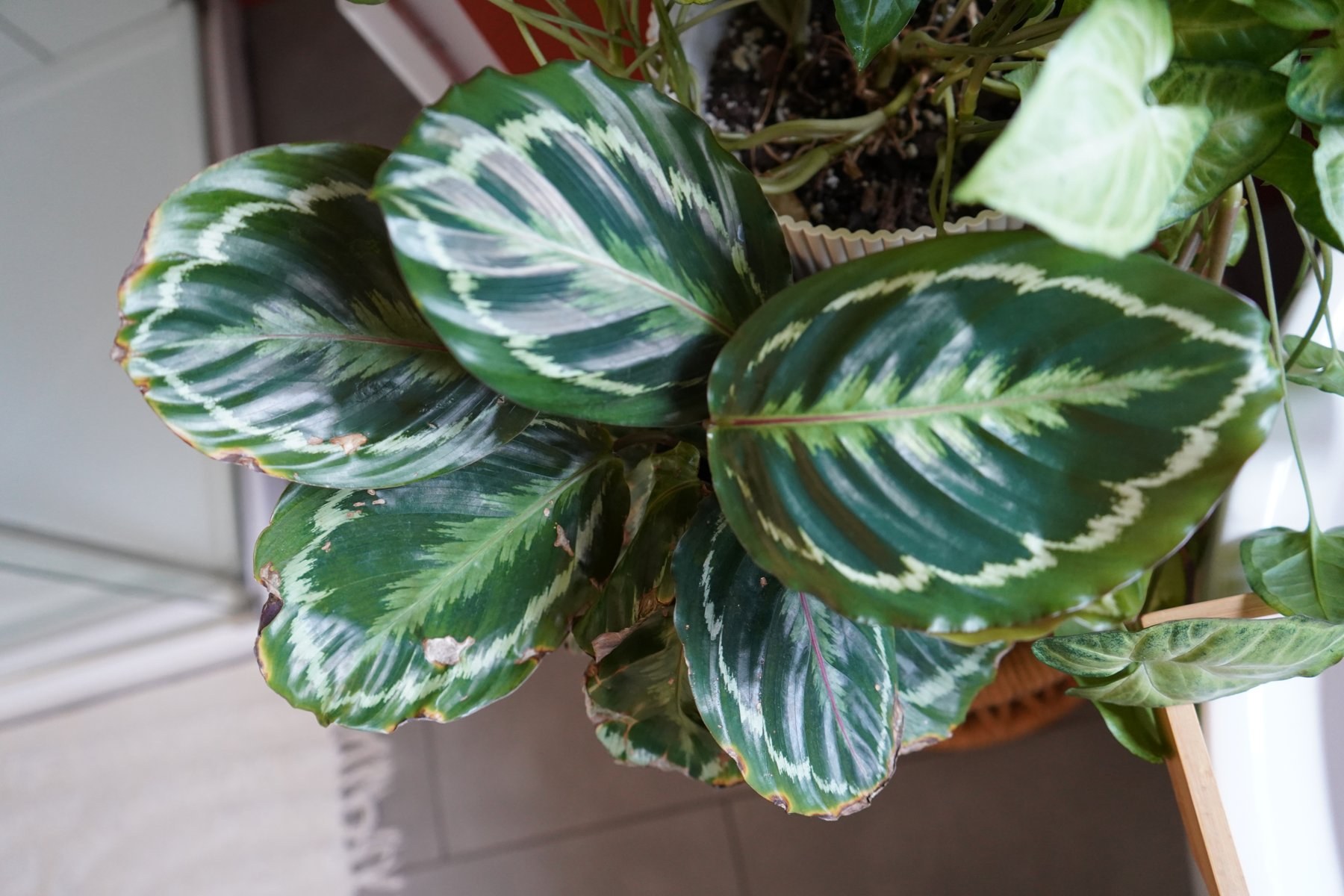
Is spraying the leaves worth it?
Not really... but it's not bad either! You can continue to do it if you like it.
The problem is that when the water evaporates, its effect on ambient humidity disappears quickly. Spraying is therefore not a reliable method to maintain a high humidity level in the long term.
The type of substrate and watering
Marantas and calatheas can be quite demanding in terms of watering. They like to have slightly moist soil, without being waterlogged.
That's why I recommend using soil that retains enough moisture while allowing excess water to drain easily. Good drainage helps prevent the roots from staying constantly in water and eventually rotting.
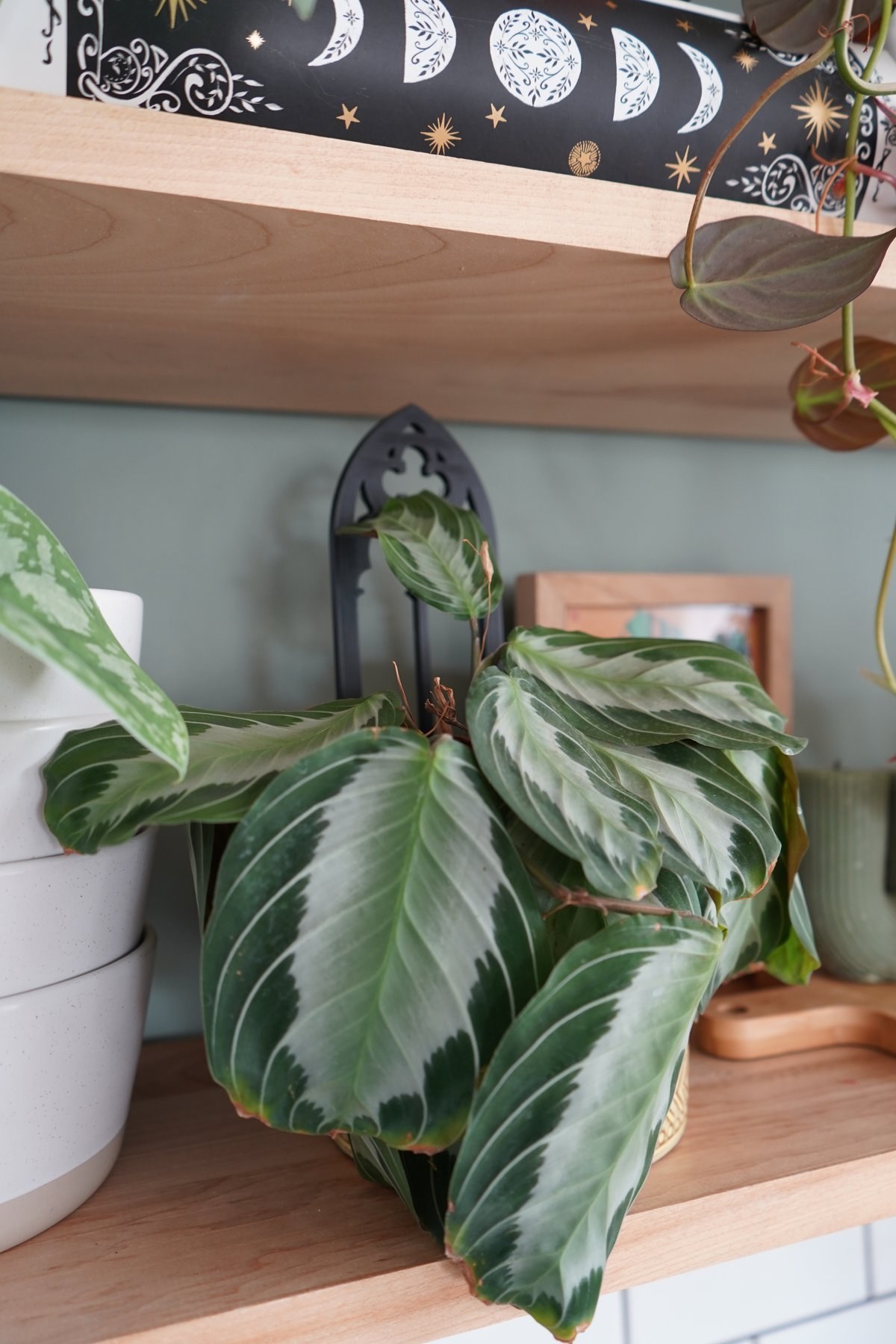
There are also other types of substrates that can be very suitable for these plants, especially in semi-hydroponic cultivation. PON and LECA are often used for this type of cultivation.
I suggest doing some research on the subject before starting, as this cultivation method is quite different from traditional soil cultivation. It requires some adjustments, particularly in terms of watering and fertilization.
What to do if the leaves have dry tips?
This is probably one of the most common problems with marantas and calatheas!
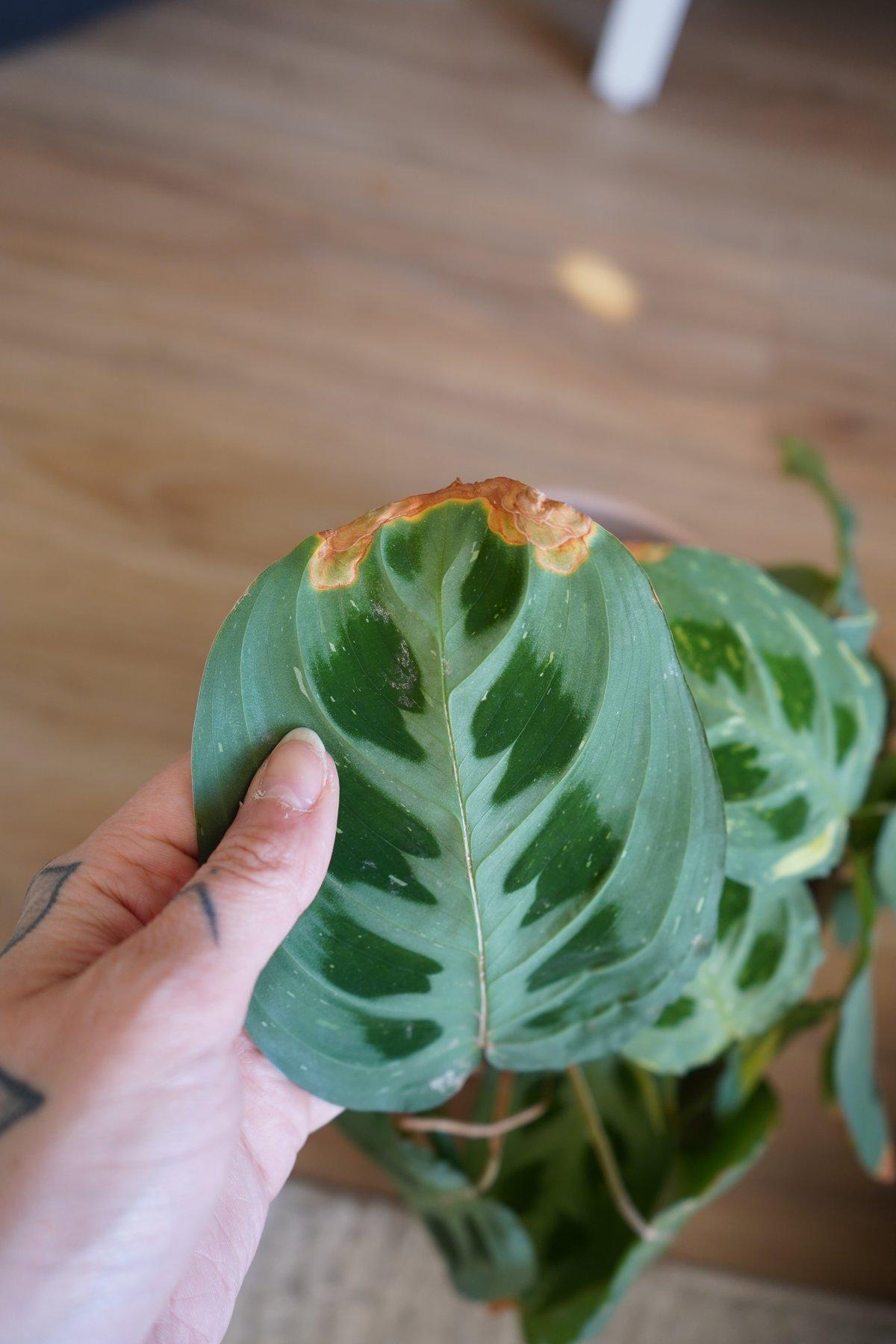
The tips and edges of the leaves that become dry or brown can be caused by several factors, including too low ambient humidity, irregular watering, or an accumulation of mineral salts in the substrate.
The water you use can also play a role. Some varieties are sensitive to very mineralized water, especially when it contains a lot of chlorine. Tap water sometimes contains a lot of it.
So, what do we use?
Rainwater is an excellent option if you can collect it. You can also use water filtered by an adapted system or distilled water.
If you use tap water, chlorine can cause brown tips, and letting the water sit does not eliminate all the minerals it contains. It is also possible to buy a product that will purify the water and remove chlorine.
In short, if you notice that the tips of your leaves are constantly drying despite good care, the quality of your water could be something to check!
Common pests
Calatheas and marantas are not immune to pests! Among the pests that can be found on these plants are the famous spider mites, also known as red spider mites. Some species are even nicknamed "red spiders."
I recommend regularly inspecting your plants and paying particular attention to the underside of the leaves. Spider mites are tiny and can go unnoticed at the beginning of an infestation. You might notice small pale spots on the leaves, fine webs, or a dusty appearance.
You can rinse the foliage to help dislodge some pests, but if an infestation is already well established, an adapted treatment will often be necessary.
I'm telling you this because I myself have lost calatheas due to significant infestations. Believe me, it's better to intervene early than to let the little critters throw a party on your plants!
In conclusion
In short, marantas and calatheas may be a little more capricious than other plants, but admit that they are hard to beat in terms of looks! With their colorful leaves, unique patterns, and small movements throughout the day, they really have something to attract attention.
The secret is to learn to understand their needs and find what works for you. I hope this article gives you a little more confidence and helps you dare to adopt one.
Trucs et conseils


